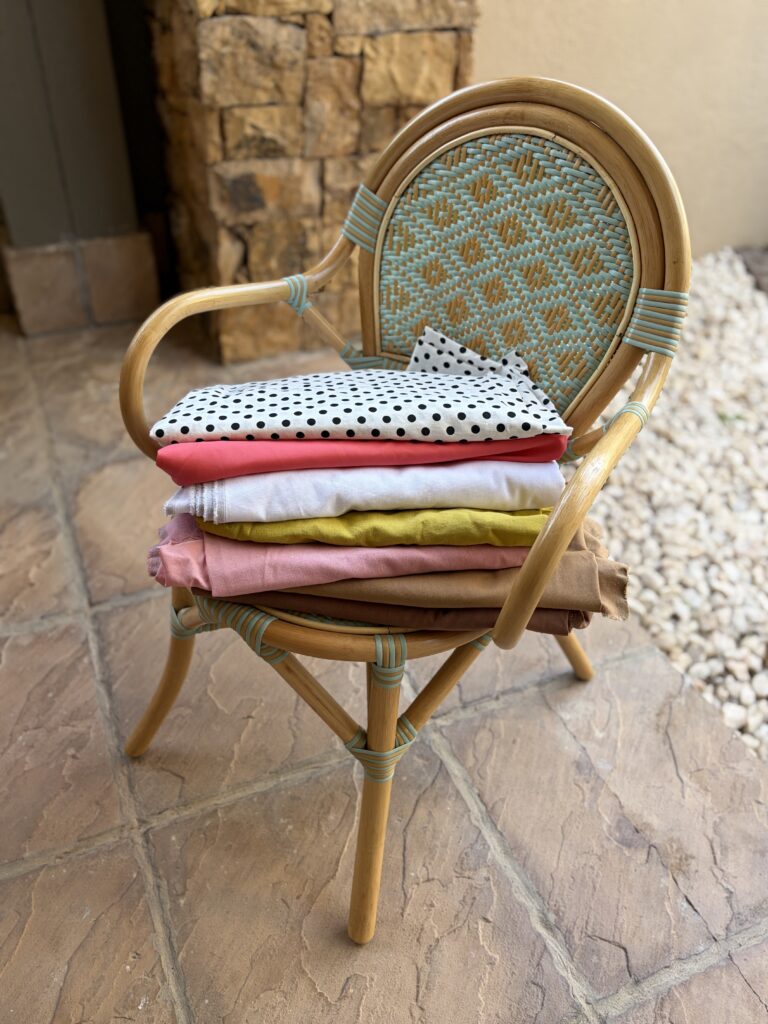
You’ve found the perfect pattern. You can already picture yourself wearing it. And then you get to the fabric shop — or the fabric website, ten tabs deep — and freeze, unsure how to go about choosing fabric for a sewing project that actually matches what you had in mind.
I’ve been there myself. Not as a beginner, but as a fashion designer standing in front of a wall of fabric bolts, second-guessing a choice I’d normally make in seconds for a client. Fabric does that to people. It’s the one decision in sewing that can’t be undone with a seam ripper.
So let’s fix that. Here’s how I actually think about choosing fabric for a sewing project — the way I was trained to, not the way most sewing blogs explain it. (For a fibre-by-fibre breakdown alongside this, the Gathered fabric glossary is a handy reference to keep bookmarked.)
Choosing fabric for a sewing project starts with the silhouette, not the fibre
Most fabric guides start with “cotton is good for beginners” and leave it there. That’s not wrong, exactly… but it skips the most useful question: what does this pattern need the fabric to do?
Every silhouette has a job for its fabric. A shift dress needs a fabric with just enough body to skim rather than cling. A wrap style needs drape, so it moves and ties well without bulk. A tailored shirt dress needs structure — enough to hold a collar and a crisp seam line without going stiff and costume-like.
This is why the fabric suggestions on the back of a pattern (or in the pattern description, for us PDF folk) aren’t arbitrary. They’re doing the drape-versus-structure thinking for you. Trust them — especially the first time you sew a new style.
The drape test (do this before you buy)
Here’s a designer trick that takes ten seconds and saves you from a dozen fabric regrets: unroll a length of the fabric and let it fall over your hand or a hanger.
- Skims and flows? Good for wrap dresses, softer shift silhouettes, anything meant to move with the body.
- Holds a crisp fold, doesn’t collapse? Good for shirt dresses, collars, structured seams, anything with tailoring.
- Somewhere in between? That’s your all-rounder fabric — often a mid-weight cotton or linen blend, and honestly where most beginner-friendly patterns live.
(Yes, even if you’ve been sewing for years — this quick test is worth doing every single time. Fabric batches vary more than you’d think.)
Matching fabric to pattern, Pattern Sewciety style
Since I get asked about choosing fabric for a sewing project constantly, here’s how it plays out across a few of our patterns:
The Audrey Shift Dress is one of our most beginner-friendly makes for exactly this reason — it’s forgiving on fabric choice. A mid-weight cotton or linen gives it a lovely, structured-but-easy shape without demanding advanced fabric-handling skills. It’s a brilliant place to practise the drape test above, because the margin for error is wide.
The Frances Shirt Dress is the opposite case — it’s where fabric choice matters most. This is a structure garment. You want something with enough body to hold the collar stand and button placket crisply — think cotton poplin, chambray, or a firmer linen. Choose something too soft and drapey here, and the whole silhouette collapses into something that reads more “oversized shirt” than “shirt dress.” Structure is the whole point.
The Margot Dress sits in that lovely middle ground — a beginner-friendly style that still rewards a slightly more considered fabric choice, especially if you want it to look polished rather than homemade.
A few honest rules for choosing fabric for a sewing project
- Buy a little more than you think. Fabric mistakes are far more forgivable than fabric shortages.
- When in doubt, go natural fibre. Cotton and linen are honest to work with — they behave the way you expect, which matters enormously when you’re still learning to read fabric.
- Prints hide more than you’d think — but they also hide precision. A busy, small-scale print is genuinely a beginner’s best friend. Save the bold, seam-matching statement print for once you’re confident.
- Don’t let a “beautiful” fabric override a “right” fabric. The most gorgeous silk in the shop will not make a good shift dress if the pattern was drafted for structure. Save it for something that wants it.
The real secret to choosing fabric with confidence
Fabric confidence isn’t a talent some people are born with. It’s pattern recognition — quite literally. The more you sew, the more you’ll recognise which fabrics behave like which others, and the faster that fabric-wall panic will fade.
Until then, lean on the drape test, trust the fabric suggestions on your pattern, and remember — every fashion designer you admire started exactly where you are now, unsure, standing in front of a bolt of fabric, hoping they’d chosen well. I’ve got you. Start with a pattern that forgives, and let your fabric instincts build from there.